
Low Temperature Defatting Process
Low temperature defatting is a method for removing fat from beef trimmings by gently heating them up to 40°C (104°F) to melt the fat without altering the meat’s qualities. This process is often used in the food industry to separate the material into a protein-rich solid stream and a liquid fat stream. The process involves grinding the trimmings followed by heating to liquefy fats, then decanting to separate the lean meat from the liquids and separating the liquid stream into fat and water. Rapid cooling of the lean meat is necessary to maintain quality and prevent bacterial growth.
Natec Network offers a continuous solution with accurate temperature control to ensure a reliable process with a high throughput.
1. Grinding
Fatty beef trimmings are used as raw material. These are ground down to maximise the surface area for efficient processing as done by Grinders.
2. Low Temperature Defatting
The ground trimmings are mildly heated to around 100°F (37.8°C) to liquefy the fat but prevent the meat from cooking. The temperature control included in the RotaTherm continuous cooker make this process reliable.
3. Decanting
After heating, the ground trimmings separate into liquid and solid materials. A decanter is used to separate the lean meat fraction from the fatty liquid phase.
4. Separation
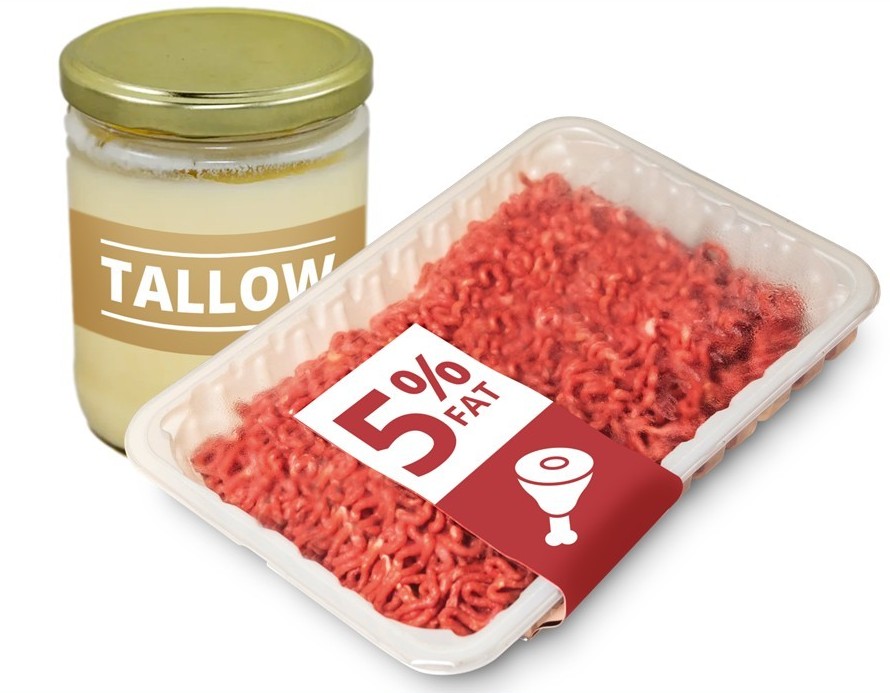
The liquid stream is separated into water and fat by using centrifuges (separators). The fat collected is used as edible tallow.
5. Further Processing
The lean meat is treated with antimicrobial substances to control microbes (e.g. citric acid) and immediately cooled, often with CO2 injection or other cooling systems, to prevent bacteriological contamination and preserve quality. Pressed into blocks for shipping the produced lean meat can increase the leanness of ground beef products by being mixed into meat products to lower fat content and maintain a tender texture.
The separated fat is processed, and the resulting edible tallow is resaleable for frying, baking or cosmetics. The same process can be used for producing technical tallow used to produce biodiesel fuel, soap, candles, and lubricants.
Benefits with the Natec Network
RotaTherm for Meat Processing

Tell us about
your project
Contact us and we will help you
set up your processing line.