Traditional Cream Cheese Production
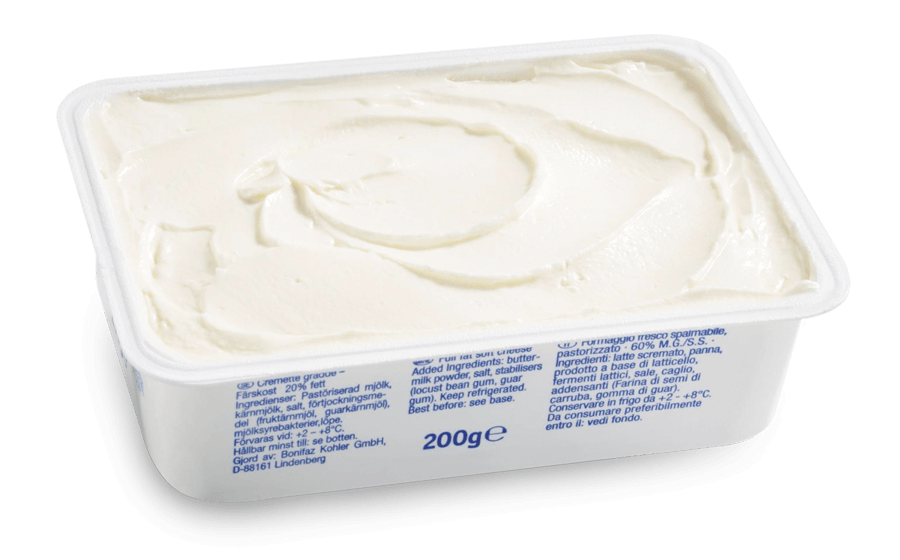
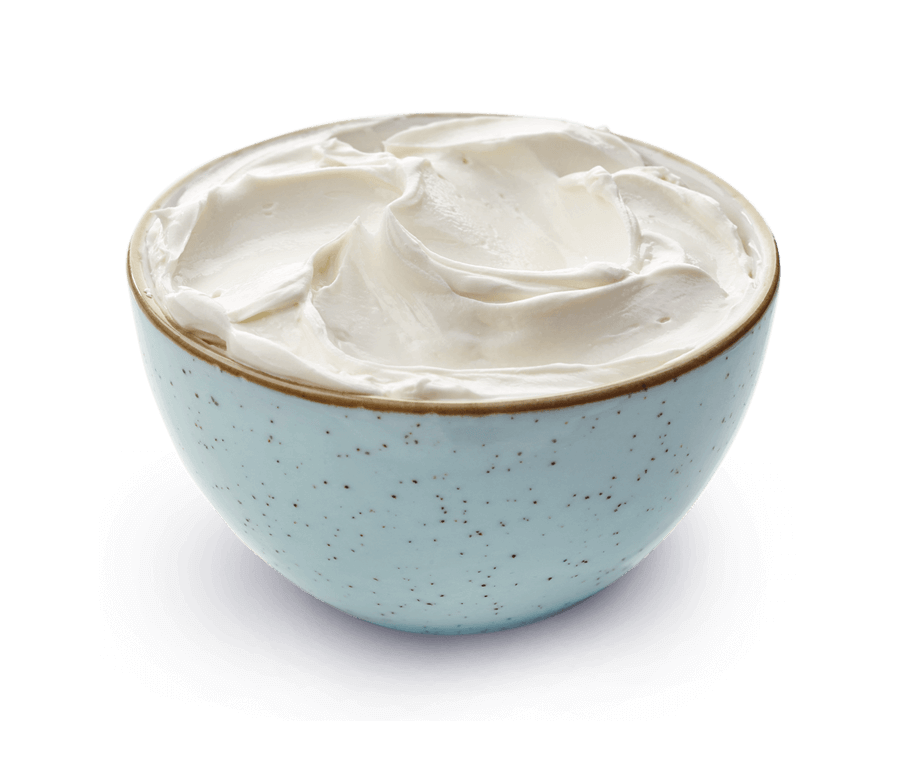
Cream cheese is made by pasteurizing, standardizing and homogenizing milk and cream, then adding lactic acid starter culture to ferment and coagulate the mixture into curds. After separating the liquid whey, the curds are blended with salt (and optionally stabilizers), heated, homogenized for a smooth texture, and then packaged and cooled.
1. Milk Pasteurization & Standardization
To destroy pathogenic bacteria and significantly reduce other spoilage microorganisms the milk is heated to a specific temperature for a set amount of time using a heat plate exchanger and then rapidly cooled. To create a consistent and uniform fat content a cream separator uses a centrifuge to separate milk into skim milk and cream. The separated skim milk and cream are then precisely blended back together to achieve the desired fat levels. An optional additional homogenization step improves fat distribution throughout the milk.
2. Fermentation & Coagulation
A starter culture of lactic acid bacteria is added to the pasteurized milk and cream. The bacteria convert milk sugar (lactose) into lactic acid, lowering the milk’s pH and causing it to coagulate and to form curds.
3. Curd Processing
The excess liquid, or whey, is separated from the curds, often using centrifuges or filtration equipment. The curds are blended with salt (and optionally with stabilizers, which prevent moisture separation during storage) and heated to achieve a smooth, homogeneous texture.
The ShearTherm batch cooker was specifically designed to achieve homogenous texture in cream cheese products.
The mixture is passed through a homogenizer to ensure a smooth, uniform consistency.
Natec Network ShearTherm
4. Filling & Cooling
The hot homogenized mixture is filled into cups using the hot fill method sterilizing both the product and the cup. The final product is then rapidly cooled to stop fermentation and control microbial activity and ready for storage and sale.
Recombined Cream Cheese Production
To save space and investment in numerous equipment like e. g. milk storage tanks, plate heat exchanger, cream separator, fat measurement equipment, homogenizer, coagulator or fermentation tank, recombined cream cheese production is a cost-effective alternative.
Its production process involves reconstituting skim milk powder in water, adjusting the fat content with a milk fat source and the acidifying the mixture to form a curd.
1. Ingredient Recombination
Water and milk powder are combined to create reconstituted milk. A fat source, such as cream or butter oil, is added to achieve the desired fat content. Lactic or citric acid is added to lower the pH of the mixture, initiating protein coagulation and the formation of a curd.
The water, powder and liquids dosing systems of the ShearTherm make the ingredient recombination step easy and seem effortless.
Natec Network ShearTherm
2. Emulsion & Mixing
Water, oil and milk powder are blended to form an emulsion. A high-speed rotor, such as that of the ShearTherm, in combination with M4E Emulsion Technology, intensively mixes and hydrates the ingredients, increasing the product’s viscosity and ensuring the powders are fully dissolved. Stabilizers and other hydrocolloids are incorporated to improve texture and stability.
Natec Network ShearTherm M4E Technology
3. Heating & Homogenization
The mixture is heated to a specific temperature to ensure the ingredients are fully incorporated and to pasteurize the product. The product undergoes a final, short mixing cycle to achieve a smooth, consistent paste. For this purpose the ShearTherm batch cooker is a suitable complete solution.
Natec Network ShearTherm
4. Filling & Cooling
After the mixing is complete, the hot product is filled into cups and cooled to solidify and finalize the cream cheese texture. The finished smooth and spreadable cream cheese is then ready for sale.